Long before we had words for "community organizing" or "social cohesion," people were dancing together. Around fires, in village squares, at weddings and harvests, dance has always been the thing that turns a group of individuals into a community. Today, in an age of screens and isolation, dance continues to serve this ancient function -- perhaps more powerfully than ever. When people move together, something shifts. Walls come down. Trust builds. Strangers become neighbors.
How Dance Builds Bonds
The science behind dance as a bonding mechanism is fascinating. Researchers at the University of Oxford found that synchronized movement -- even simple rhythmic activities -- triggers the release of endorphins and increases pain tolerance, markers associated with social bonding. When we move in time with others, our brains begin to blur the boundary between self and group. This is not metaphor; it is neuroscience.
Dance builds community in ways that few other activities can match. It is inherently inclusive: you do not need to speak the same language, share the same politics, or come from the same background. A contra dance in rural Vermont brings together farmers and professors, teenagers and retirees. A hip-hop cypher in Brooklyn dissolves the distance between strangers with nothing more than a beat and a circle. The dance floor is one of the last truly democratic spaces in public life.
Community dances also create consistent, recurring gathering points. Unlike one-off events, a weekly dance becomes a ritual. People start to recognize faces. They learn names. They check in on each other when someone misses a week. Over months and years, these loose connections deepen into genuine friendships and support networks. Many dancers report that their dance community became their primary social circle -- the people they call when they need help moving, or when they need someone to talk to.
Real-World Examples
Some of the most inspiring community-building work in the world happens through dance:
-
Dance Exchange (founded by Liz Lerman in 1976) brings professional dancers into communities -- senior centers, shipyards, universities, rural towns -- to create collaborative performances. Their method, now used worldwide, centers the stories and movements of everyday people rather than trained performers.
-
Rhythm Nation Dance & Fitness and similar grassroots studios in underserved neighborhoods use dance as an anchor for youth development, offering free or low-cost classes that keep young people connected to positive mentors and peers.
-
Contra dance and folk dance networks across North America and Europe maintain vibrant, volunteer-run communities. Organizations like the Country Dance and Song Society (CDSS) support hundreds of local groups, providing resources for callers, musicians, and organizers. These dances are notable for their radical accessibility: no experience needed, no partner needed, live music, and a welcoming culture enforced by community norms.
-
AfroDance and Afrobeats communities in cities like London, Paris, and Toronto have become cultural hubs for African diaspora communities, creating spaces of joy, identity, and belonging through movement.
Starting Where You Are
You do not need a grant or a venue to start building community through dance. Some of the most powerful dance communities began with one person, a portable speaker, and a park. Here are ways to start:
- Host a living room dance party. Invite a handful of friends and neighbors. No instruction needed -- just music and willingness.
- Attend a community dance. Contra dances, folk dances, and community salsa nights exist in more places than you might expect. They are designed for newcomers.
- Volunteer with an organization. Groups like Dance Exchange, CDSS, or local dance nonprofits are almost always looking for help.
- Bring dance to where people already gather. A five-minute dance break at a community meeting, a block party with a DJ, or a lunchtime dance circle at a school can shift the energy of any group.
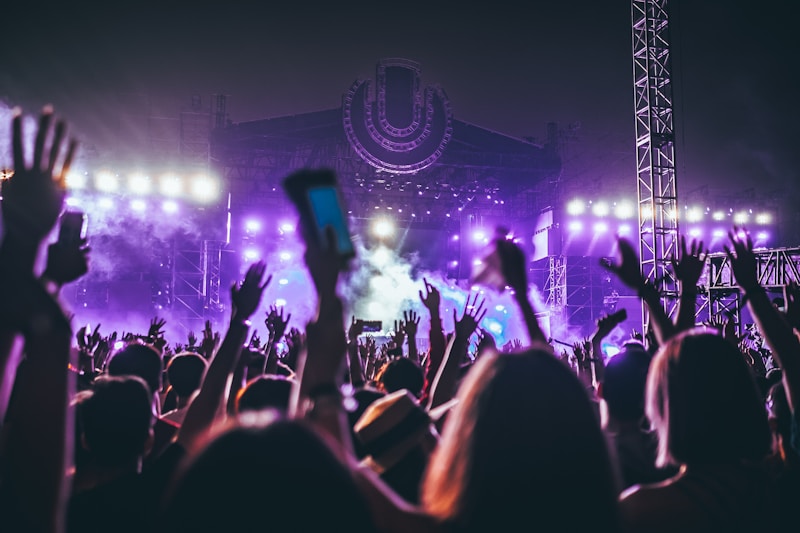
Dance does not solve every problem. But it does something that is increasingly rare and desperately needed: it puts people in the same room, moving to the same beat, sharing the same moment. And from that simple foundation, real community grows.