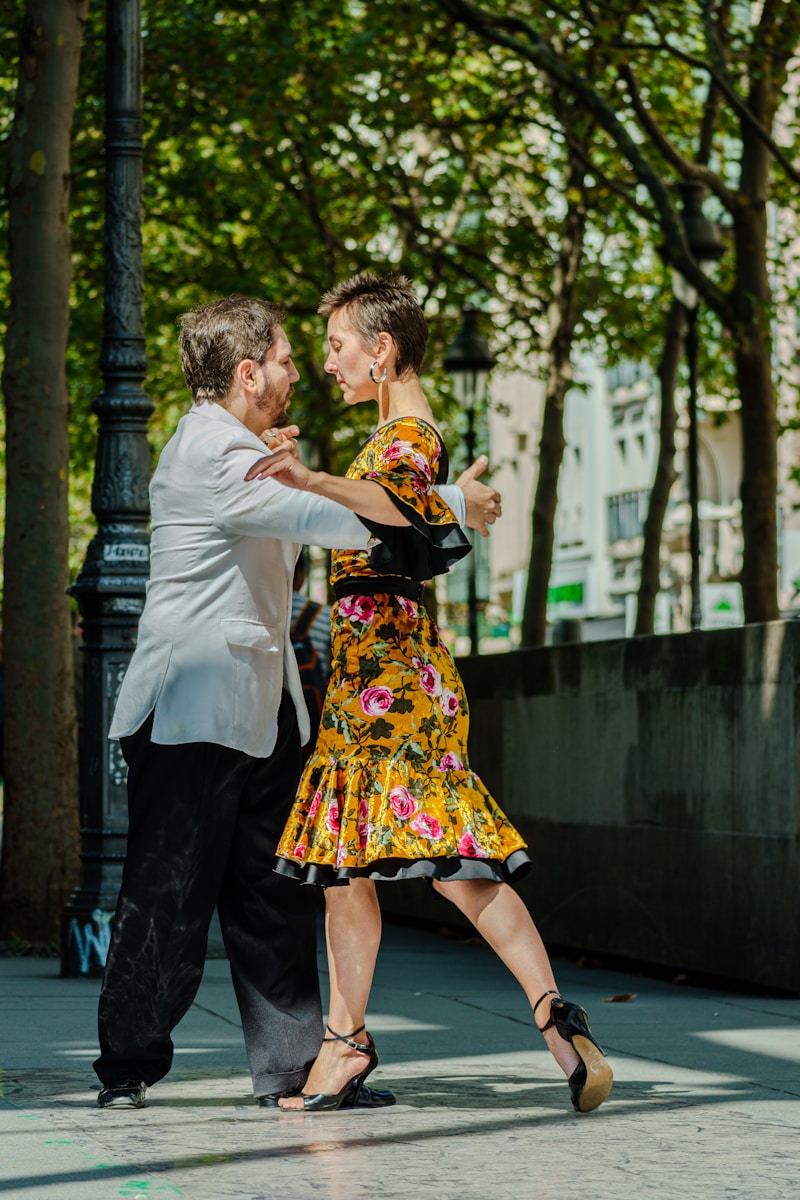
The first time you hear a salsa band lock into a groove -- the piano montuno cascading, the congas calling, the brass section blazing -- your body knows what to do before your mind catches up. Salsa is one of the world's great social dances, a joyful collision of African rhythm, Caribbean soul, and Latin American passion that has been bringing strangers together on dance floors from Havana to Helsinki for over half a century.
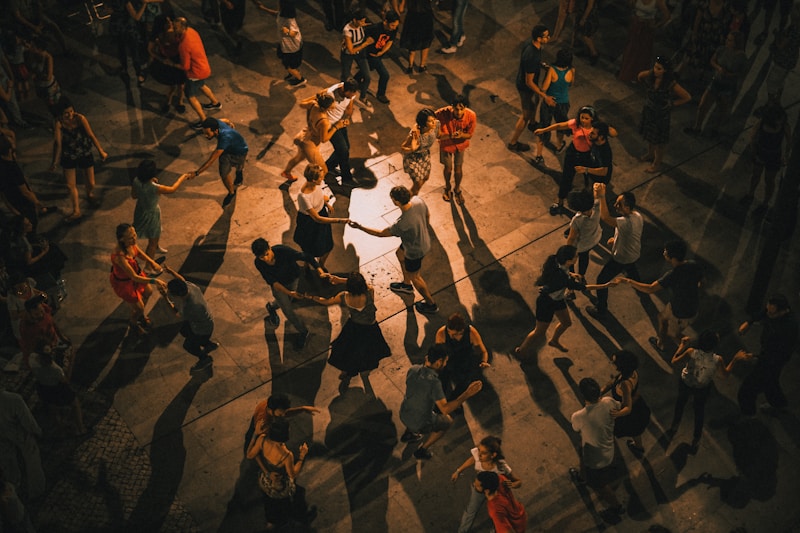
Salsa is danced to music in 4/4 time, with dancers stepping on three of the four beats in each measure (the "quick-quick-slow" rhythm). The basic step can be learned in minutes, but mastering salsa is the work of a lifetime. The dance lives in the connection between partners -- the subtle lead-and-follow communication through hands, arms, and body tension that allows two people to improvise together in real time.
Major salsa styles include:
- Cuban/Casino style -- circular movement, Afro-Cuban body motion, rueda de casino (group dance in a circle with partner switching)
- LA style (On1) -- linear, performance-oriented, with dramatic dips, spins, and tricks. Popularized by the Vazquez Brothers and Alien Ramirez.
- New York/Mambo style (On2) -- linear but breaking on the second beat, emphasizing musicality and smooth, sophisticated partner work. Associated with Eddie Torres and the Palladium Ballroom legacy.
- Colombian/Cali style -- fast footwork, minimal upper body movement, danced to the rapid tempos of Colombian salsa recordings.
Across all styles, key elements include hip movement (driven by the transfer of weight, not isolated wiggling), precise timing, and sabor -- the intangible flavor, personality, and musicality that separates technically correct dancing from truly great dancing.
Body movement in salsa comes from the core. The best dancers appear effortless because their movement is grounded and connected, with the ribcage, hips, and shoulders articulating independently. Shines (solo footwork sequences) allow dancers to showcase individuality during breaks in partner work.
Cultural Significance
Salsa music and dance emerged in the 1960s and 70s in New York City, where Cuban, Puerto Rican, Dominican, and Colombian immigrants fused son cubano, mambo, cha-cha-chá, bomba, and plena with jazz and R&B influences. The Fania All-Stars became salsa's house band, and the Palladium Ballroom became its temple.
But salsa's roots go far deeper -- back to the African rhythms brought to the Caribbean through the slave trade, the Spanish colonial guitar traditions, and the indigenous musical practices of the Americas. Every salsa song carries centuries of cultural fusion in its DNA.
Today, salsa is danced in virtually every country on Earth. Congresses (multi-day festivals with workshops, performances, and social dancing) draw thousands of dancers to cities like Los Angeles, London, Warsaw, Seoul, and Cali. The salsa community is one of the most diverse and welcoming in all of social dance.
Why People Love It
Salsa is connection. In a world increasingly mediated by screens, salsa offers something radical: three minutes of genuine human contact, wordless communication, and shared joy with a partner who might be a stranger. The music is irresistible. The community is warm. The learning curve is gentle at the start and endlessly deep for those who want to go further.
Dancers speak of the "salsa addiction" -- once you feel the magic of a perfectly synced turn pattern, or lose yourself in the conga rhythm during a solo shine, it is hard to imagine life without it. Salsa social dancing is one of the few activities where beginners and advanced dancers share the same floor, and where a single song can spark a friendship that lasts for years.