Imagine sitting across from a therapist who never asks you to find the right words. Instead, she asks you to stand, to breathe, and to move. She mirrors your gestures — not to mimic, but to understand. When your shoulders curl inward, she does not say "you look closed off." She curls her own shoulders in and then, slowly, opens them, inviting your body to follow if it is ready. This is Dance/Movement Therapy, and for the millions of people whose pain lives deeper than language can reach, it can be transformative.

Origins and Clinical Foundations
Dance/Movement Therapy (DMT) is a recognized form of psychotherapy that uses movement as its primary mode of intervention. It was pioneered in the 1940s by Marian Chace, a dancer who noticed that her students' emotional states were reflected in their movement patterns — and that by changing those patterns, their emotional states shifted too. She began working with psychiatric patients at St. Elizabeths Hospital in Washington, D.C., and her methods proved so effective that they formed the foundation of a new clinical discipline.
The American Dance Therapy Association (ADTA), founded in 1966, defines DMT as "the psychotherapeutic use of movement to promote emotional, social, cognitive, and physical integration." Practitioners hold graduate degrees and complete supervised clinical hours, much like traditional psychotherapists. DMT is now practiced in hospitals, psychiatric facilities, rehabilitation centers, schools, and private practice across more than 40 countries.
The theoretical basis of DMT rests on several principles. First, body and mind are interconnected — emotional states produce physical patterns (clenched jaws, collapsed posture, restless legs), and altering those patterns can shift the underlying emotion. Second, movement is communicative — it reveals unconscious material that verbal therapy may never surface. Third, the therapeutic relationship can be built through shared movement, a process called kinesthetic empathy, which often creates trust faster than conversation alone.
Research supports these claims. A 2015 Cochrane review found evidence that DMT reduces depression symptoms. Studies with trauma survivors, including combat veterans and sexual abuse survivors, have shown that DMT helps regulate the autonomic nervous system, reducing hyperarousal and dissociation. Dr. Bessel van der Kolk, author of The Body Keeps the Score, has argued extensively that body-based therapies like DMT are essential for treating trauma because traumatic memories are stored somatically, not just cognitively.
What a Session Looks Like
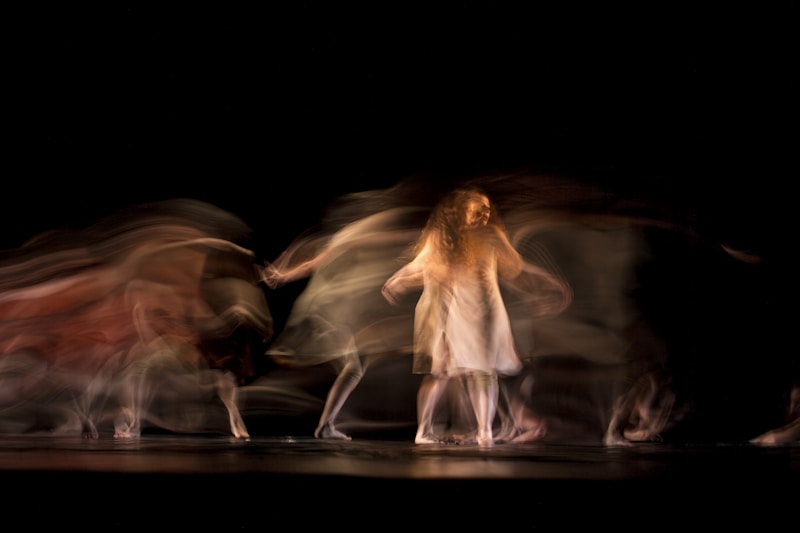
A typical DMT session lasts 45 to 60 minutes and follows a loose arc. It begins with a warm-up — gentle movement to bring awareness to the body and establish a sense of safety. The therapist might invite the client to notice where they feel tension, to stretch into the space around them, or to walk at different speeds.
The development phase is where the deeper work happens. The therapist might use techniques like mirroring (reflecting the client's movement back to them), amplification (making a small gesture larger to explore its emotional content), or guided improvisation. A client who habitually makes herself small might be encouraged to take up more space. A client who moves rigidly might explore fluidity. There is no choreography, no right or wrong — only exploration.
The session closes with a cool-down and verbal processing. Clients are invited to share what they noticed, though speaking is never required. Many clients report that insights surface during movement that they could not have accessed through conversation — a sudden memory, a shift in perspective, or simply the recognition that their body holds wisdom their mind has been ignoring.
Who Benefits and How to Begin
DMT has documented effectiveness with an extraordinarily wide range of populations: children with autism, older adults with dementia, people recovering from eating disorders, individuals with PTSD, and those managing chronic pain or anxiety. Its non-verbal nature makes it accessible to people who struggle with traditional talk therapy — including those with language barriers, cognitive disabilities, or simply a deep discomfort with putting feelings into words.
If you are curious about DMT:
- Find a credentialed therapist. Look for the credentials BC-DMT (Board Certified Dance/Movement Therapist) or R-DMT (Registered) through the ADTA directory.
- Come with an open mind. You do not need dance experience. DMT is not about technique or performance — it is about using your body as a pathway to understanding yourself.
- Give it time. Like any therapy, DMT unfolds over sessions. The first meeting is about establishing safety and rapport. Deeper work develops as trust builds.
Marian Chace once said, "The body never lies." Dance/Movement Therapy takes that truth and builds an entire practice around it — one that honors what the body knows, even when the mind has not yet caught up.