Balance is something most people take for granted — until they lose it. As we age, declining balance becomes one of the most significant risk factors for falls, which are the leading cause of injury-related death in adults over 65. But balance isn't a fixed trait; it's a skill, and like any skill, it can be trained. Dance is arguably the most enjoyable and effective way to do it.
The Science of Balance and Dance
Balance relies on three interconnected systems: the vestibular system (inner ear), the proprioceptive system (body position sense from muscles and joints), and visual processing. Dance uniquely trains all three simultaneously.
When you perform a pirouette, your vestibular system manages the rotational forces. When you hold an arabesque, your proprioceptors fire constantly to make micro-adjustments. When you follow a partner through an unexpected turn, your visual system rapidly processes spatial information. No other single activity integrates these three balance systems as thoroughly as dance.
Research backs this up powerfully. A 2012 study in the Archives of Gerontology and Geriatrics found that a 12-week dance program improved balance, gait, and fall risk scores in elderly participants significantly more than traditional exercise programs. A systematic review published in Age and Ageing (2017) concluded that dance interventions reduced fall rates by 37% in older adults — a remarkable figure that outperformed many conventional balance-training programs.
The coordination benefits are equally impressive. Dance requires bimanual coordination (arms doing different things), cross-lateral movement (right arm with left leg), rhythmic timing, and spatial awareness. A study in PLOS ONE found that dancers showed superior sensorimotor integration compared to musicians and non-trained individuals, suggesting that dance develops a uniquely comprehensive form of coordination.
Beyond Falls: Why Coordination Matters at Every Age
While fall prevention gets much of the research attention, the balance and coordination benefits of dance extend to people of all ages:
- Children who dance develop motor skills faster and show improved academic performance, according to research in the Journal of Dance Education. The complex coordination demands of dance stimulate neural development during critical growth periods.
- Athletes use dance to improve sport-specific agility. Many NFL teams include ballet in their training programs because the balance and quick-change-of-direction skills transfer directly to the field.
- Desk workers benefit from the postural awareness that dance develops. Learning to sense where your body is in space carries over to how you sit, stand, and move throughout the day.
- Musicians find that dance training improves their rhythmic precision and physical comfort while performing.
The coordination developed through dance is also cognitive. Learning choreography requires memorizing sequences, anticipating transitions, and adapting in real time. This combination of physical and mental coordination is what neuroscientists call dual-task training, and it's one of the most effective ways to maintain cognitive function as we age.
Getting Started: Dance Styles for Better Balance
Every dance style improves balance, but some are particularly effective:
- Tai chi-influenced contemporary dance combines slow, controlled weight transfers with artistic expression. Excellent for older adults or those recovering from injury.
- Ballet is the gold standard for single-leg balance training. Even a beginner barre class includes dozens of balance challenges.
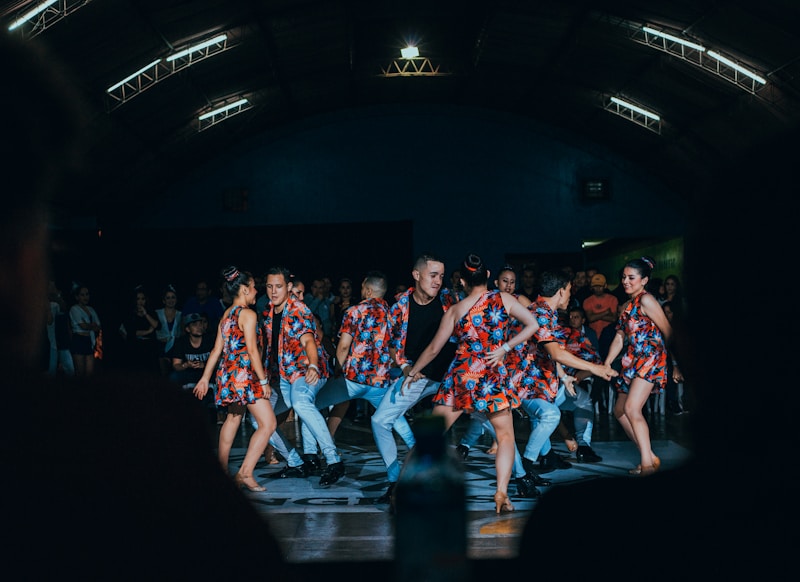
- Partner dances (salsa, tango, swing) add the unpredictability of another person, which forces rapid balance adjustments and sharpens reactive coordination.
- West African dance develops dynamic balance — the ability to maintain stability while moving vigorously through space.
Start where you are. If standing on one foot for 10 seconds is challenging, that's your baseline. Within weeks of regular dance practice, you'll notice improvements not just in the studio but in daily life — catching yourself on icy sidewalks, navigating crowded spaces, or simply feeling more confident on your feet.
Balance and coordination aren't gifts reserved for the naturally athletic. They're trainable skills, and dance is the most complete training ground there is.