Akram Khan
On the night of August 12, 2012, three billion people watched as a lone figure appeared on the stage of the Olympic Stadium in London. Dressed in a simple suit, Akram Khan began to move — slowly at first, then with gathering intensity, his body telling a story of labor, loss, and transformation to the pounding music of Emeli Sande. It was the closing segment of the London Olympics opening ceremony, choreographed by Khan himself, and in those few luminous minutes, the Bangladeshi-British dancer introduced himself to the largest audience in the history of live performance. For those who already knew his work, it was a confirmation. For the billions who didn't, it was a revelation.
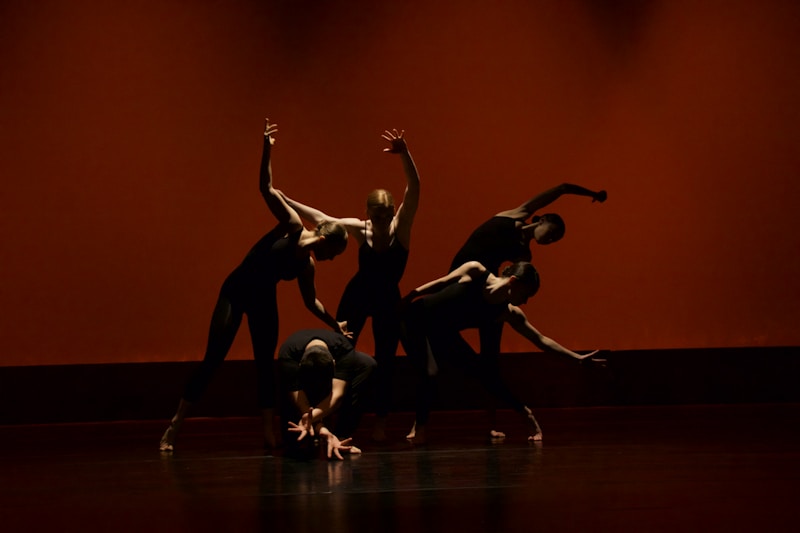
Between Two Worlds
Akram Khan was born on July 29, 1974, in Wimbledon, London, to Bangladeshi immigrant parents. His father ran a restaurant; his mother dreamed of her children succeeding in British society. At age seven, Akram began studying kathak, the classical North Indian dance form characterized by intricate footwork, expressive storytelling, and dizzying spins called chakkars. His teacher, Sri Pratap Pawar, was a traditionalist who drilled the young boy in the rigorous vocabulary of the form — the tatkar (footwork patterns), the tukras (rhythmic compositions), and the abhinaya (expressive storytelling).
By age thirteen, Khan had performed in Peter Brook's legendary nine-hour production of The Mahabharata (1988), touring the world with one of the twentieth century's greatest theater directors. The experience planted a seed: classical tradition and contemporary experimentation could coexist in a single body.
Khan went on to study contemporary dance at De Montfort University and then at the Northern School of Contemporary Dance in Leeds. It was there that he began to fuse kathak's rhythmic precision with the weight, floor work, and release techniques of Western contemporary dance — a synthesis that would become his signature.
A Language Between Kathak and Contemporary
In 2000, Khan founded the Akram Khan Company in London, and over the next two decades he created a body of work that is among the most acclaimed in contemporary dance:
- Kaash (2002) — Khan's first full-length group work, set to a thunderous score by composer Nitin Sawhney and featuring lighting by Anish Kapoor. It explored the Hindu concept of creation and destruction through explosive kathak footwork and contemporary partnering.
- zero degrees (2005) — A duet with Sidi Larbi Cherkaoui, accompanied by life-size puppet doubles of both dancers, sculpted by Antony Gormley. A meditation on identity, migration, and the borders between self and other.
- DESH (2011) — Khan's most personal work, a solo exploring his Bangladeshi heritage and the immigrant experience in Britain. Using projection, animation, and storytelling, DESH (the Bengali word for "homeland") became an international sensation, touring to over 50 cities across 15 countries.
- Until the Lions (2016) — Based on Karthika Nair's retelling of The Mahabharata, this work brought three dancers into a circular arena of sand, combining kathak with martial arts and Flamenco-influenced movement.
- Giselle (2016) — Khan's reimagining of the Romantic ballet classic for English National Ballet, set among migrant garment workers rather than peasant villagers. It won the Olivier Award for Best New Dance Production and has been hailed as one of the most important ballet reimaginings of the twenty-first century.
- Xenos (2018) — Khan's declared final full-length solo, portraying an Indian colonial soldier in the trenches of World War I. Raw, harrowing, and deeply moving, it toured globally to universal acclaim.
What makes Khan's movement language unique is the conversation between kathak and contemporary. The kathak footwork — rapid, percussive, mathematically precise — grounds his body in tradition, while the contemporary vocabulary allows him to collapse to the floor, twist through space, and partner with an abandon that classical kathak would never permit. The two forms don't merely alternate; they interpenetrate, creating a third language that belongs to Khan alone.
Legacy: Dance as a Bridge
Khan has received a CBE (Commander of the Order of the British Empire) and has been named one of the most influential people in British culture by numerous publications. His works have been performed on every continent, and his company has become one of the most sought-after touring ensembles in the world.
Beyond performance, Khan has become an outspoken advocate for the role of the arts in society, for immigrant stories, and for the idea that cultural hybridity is not a compromise but a source of extraordinary creative power. He has collaborated with artists as diverse as actress Juliette Binoche (In-I, 2008), sculptor Anish Kapoor, and ballerina Sylvie Guillem (Sacred Monsters, 2006).
Now in his early fifties, Khan has stepped back from solo performance but continues to create and direct. His influence on a generation of British-Asian and South Asian contemporary artists is profound — dancers and choreographers like Aakash Odedra and Shobana Jeyasingh cite him as a transformative figure.
"I am not interested in fusion," Khan has said. "I am interested in confusion — the beautiful confusion that happens when two traditions collide and something new is born." In that collision, Akram Khan has found one of the most distinctive and deeply human voices in the dance world today.