Picture the Savoy Ballroom in Harlem, 1935. A big band is swinging so hard the floorboards bounce. Couples whip across the room in a blur of flying feet, aerial lifts, and pure, unbridled joy. This is Lindy Hop -- the original swing dance -- and it is one of the most exhilarating, creative, and fundamentally happy dance forms ever invented. Born from the genius of Black American dancers during the Swing Era, swing dance changed the world and keeps doing so every time a band counts off a tune.
Technique & Characteristics
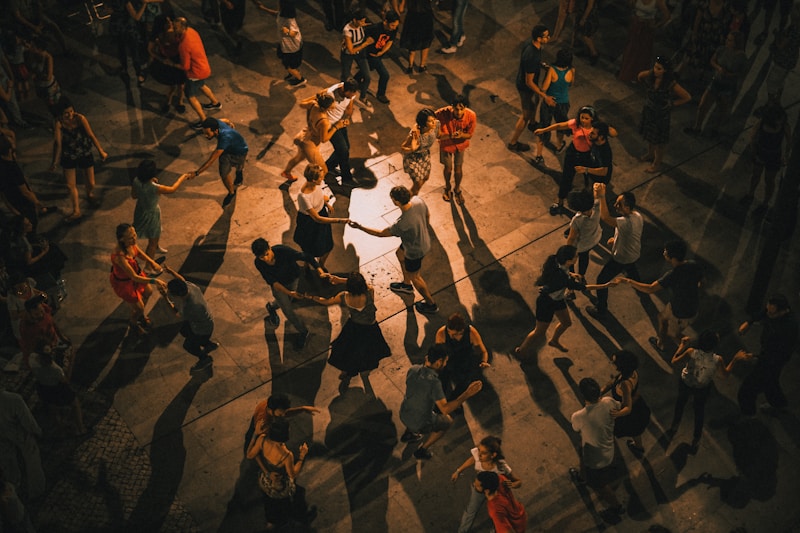
Swing dance is a family of partner dances that evolved alongside swing jazz music in the 1920s through 1940s. The major styles include:
- Lindy Hop -- the granddaddy of all swing dances, born at the Savoy Ballroom in Harlem. Characterized by its swingout (an elastic, circular partnering pattern), improvised footwork, connection to jazz rhythms, and the freedom to incorporate aerials (lifts and throws). Danced in both closed and open position.
- Charleston -- originating in the 1920s, featuring kicking, swiveling footwork that can be danced solo, with a partner, or in lines. Often integrated into Lindy Hop.
- Balboa -- developed in Southern California's crowded ballrooms, Balboa is danced in close embrace with subtle, intricate footwork. Perfect for fast tempos.
- Collegiate Shag -- a high-energy, hoppy dance popular in the 1930s South, danced to uptempo swing.
- East Coast Swing / Jive -- simplified, six-count patterns that became popular in the 1940s and are still taught widely as an entry point to swing dancing.
- West Coast Swing -- a slotted, smooth partner dance that evolved from Lindy Hop and is now danced to contemporary pop, R&B, and blues music.
What makes swing dancing unique is its elasticity -- the stretch and compression between partners that creates a living, breathing connection. Great swing dancers play with the music the way jazz musicians do: riding the swing feel, syncopating, hitting accents, and leaving space for surprise. The dance is a conversation, not a monologue.
Aerials (also called air steps) are the spectacular lifts, flips, and throws that made Lindy Hop famous in films like Hellzapoppin' (1941). While social dancing is typically grounded, aerial work remains a thrilling part of performance and competition.
Cultural Significance
Swing dance is inseparable from the story of jazz music and Black American culture. The Savoy Ballroom (1926-1958) was one of the first racially integrated public spaces in America, and on its dance floor, Black dancers like Frankie Manning, Norma Miller, Al Minns, and Leon James created a movement vocabulary that would influence virtually every popular dance form that followed.
The swing era (roughly 1935-1945) made swing dancing a national phenomenon. Bands like Count Basie, Duke Ellington, Benny Goodman, and Chick Webb played for thousands of dancers nightly. The dance crossed racial and class lines, becoming America's first truly mainstream partner dance.
After World War II, swing's popularity faded as music shifted toward bebop, rock and roll, and eventually soul and funk. But a remarkable revival began in the late 1980s and 1990s, driven by dancers who sought out the original Savoy-era pioneers -- many still alive and eager to teach -- and learned directly from them.
Today, the global swing dance community is thriving. Lindy Hop festivals and exchanges (weekend-long social dance events) take place in hundreds of cities worldwide. The community has also engaged in important conversations about honoring the Black roots of the dance and ensuring that its history is told truthfully.
Why People Love It
Swing dancing is joy distilled into movement. The music is irresistible -- when a big band locks into a groove, standing still is not an option. The dance rewards playfulness, humor, and musical creativity. Unlike more formal partner dances, swing encourages both partners to contribute ideas, making every dance a unique collaboration.
The community is legendarily welcoming. Swing dance scenes around the world share a culture of inclusivity, where beginners dance alongside veterans and everyone is encouraged to ask anyone to dance regardless of skill level, age, or background.
There is a phrase in the Lindy Hop world: "It don't mean a thing if it ain't got that swing." Duke Ellington wrote it, and swing dancers live it every time they step onto the floor.