Imagine walking into a large, open room. There are no mirrors, no bar, no instructor calling out steps. Shoes are off. Phones are away. The music starts low -- ambient, barely there -- and over the next two hours it will build through driving beats and soaring melodies before settling back into stillness. Around you, people are moving however their bodies want to move: spinning, stomping, swaying, crawling on the floor, standing perfectly still with eyes closed. No one is watching. No one is judging. This is ecstatic dance, and for a growing global community, it is both a practice and a lifeline.
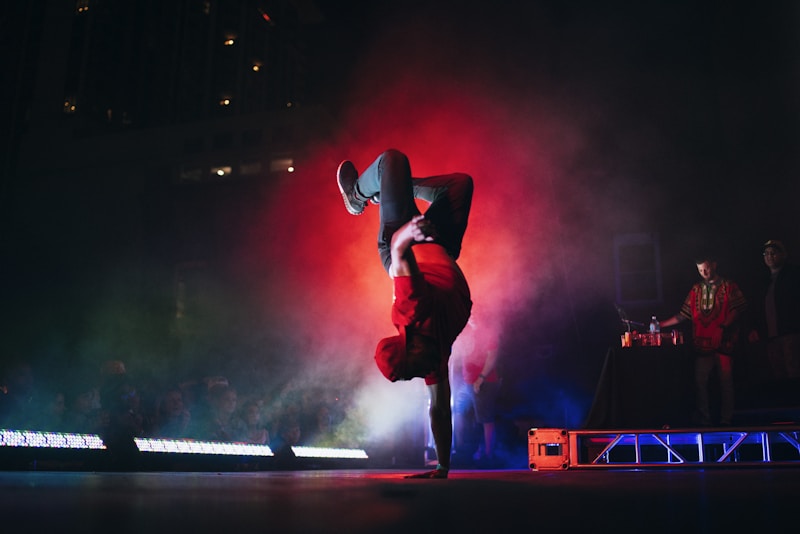
The Philosophy of Free Movement
Ecstatic dance sits at the intersection of dance, meditation, and somatic therapy. Its core premise is radical simplicity: move your body however it wants to move, without choreography, without performance, without the social pressures that govern most dance spaces. There are typically a few simple guidelines -- no talking on the dance floor, no substances, consent before touching another dancer -- and beyond that, everything is welcome.
The roots of this movement run deep. Gabrielle Roth developed the 5Rhythms practice in the 1970s, mapping a "wave" of movement through five stages: Flowing, Staccato, Chaos, Lyrical, and Stillness. Her work drew from shamanic traditions, gestalt therapy, and her own intuition as a dancer and teacher. 5Rhythms classes and workshops are now offered in over 50 countries, facilitated by hundreds of certified teachers.
Alongside 5Rhythms, other free-movement practices have flourished:
- Open Floor -- developed by former 5Rhythms teachers, emphasizing relational movement and emotional awareness
- Soul Motion -- a "conscious dance practice" focused on the dancer's inner experience
- Biodanza -- created by Rolando Toro in Chile in the 1960s, integrating music, movement, and human connection exercises
- Contact Improvisation (CI) -- originated by Steve Paxton in 1972, exploring the physics of shared weight, momentum, and spontaneous partnering. CI jams happen worldwide and are a cornerstone of the experimental dance community.
What unites these practices is a belief that the body has its own intelligence. When given space and permission, it will move toward what it needs -- release, expression, rest, play, grief, joy. Practitioners often describe the experience as profoundly cathartic, comparing it to therapy, meditation, or even ceremony.
The Global Ecstatic Dance Movement
Ecstatic dance has grown from a niche practice into a global phenomenon. Ecstatic Dance events (sometimes branded simply as "ED") now take place regularly in cities from Berlin to Bali, Portland to Sao Paulo. The largest hub, Ecstatic Dance Oakland, has hosted thousands of dancers and inspired a decentralized network of events worldwide.
The format typically follows a "wave" structure: an opening circle, a DJ-led journey of about 90 minutes to two hours, and a closing circle. DJs curate sets that move through genres and intensities, creating a sonic narrative that guides the room without dictating its movement. The music might shift from ambient electronica to West African drums to dubstep to classical strings, all in a single session.
During the COVID-19 pandemic, ecstatic dance communities adapted quickly, offering outdoor events and eventually returning to indoor spaces with renewed appreciation. Many communities saw a surge of newcomers -- people seeking embodied experience and human connection after months of isolation.
Finding Your Way In
If ecstatic dance intrigues you, here is how to explore:
- Search for local events. Look for "ecstatic dance," "conscious dance," "5Rhythms," or "contact improvisation" in your area. Websites like ecstaticdance.org maintain a global directory.
- Arrive with an open mind. Your first time may feel strange. You might stand on the edge for a while, unsure what to do. That is completely fine. There is no wrong way to participate.
- Wear comfortable clothes. Layers are helpful -- you will likely warm up significantly. Most ecstatic dances are barefoot.
- Leave expectations at the door. You might cry. You might laugh. You might spend the whole time gently rocking. All of it is valid.
- Explore workshops. 5Rhythms, Open Floor, and Contact Improvisation all offer introductory workshops that provide helpful frameworks if pure free-form feels too open-ended.
Ecstatic dance is not for everyone, and it does not need to be. But for those who find their way to it, the practice often becomes a weekly anchor -- a place to feel the full range of being human, held by music and the quiet solidarity of others doing the same.