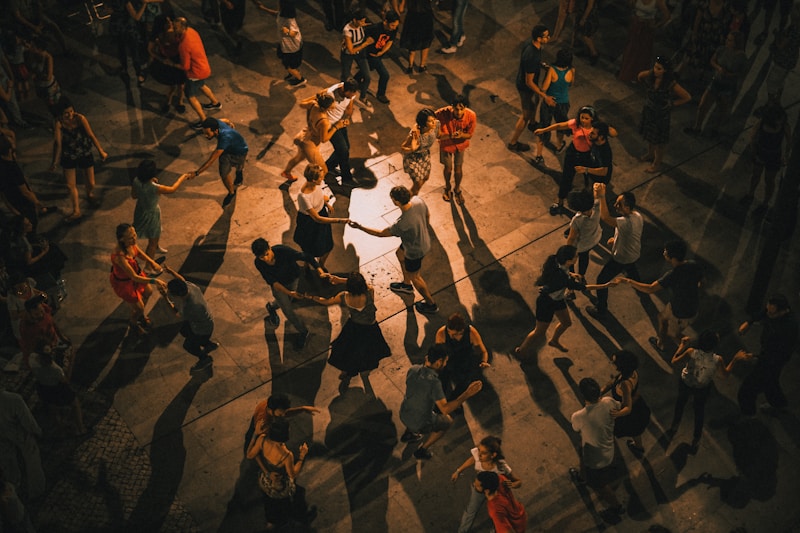
In a dimly lit milonga in Buenos Aires, an orchestra of strings and bandoneons exhales a melody so achingly beautiful it feels like a wound being sung. Two dancers rise from their seats, meet with a glance -- the cabeceo -- and walk to the floor. They embrace, breathe together, and begin to move as one. This is Argentine tango: not a sequence of steps, but a conversation between two souls conducted entirely through the body.
Technique & Characteristics
Argentine tango is fundamentally an improvised social dance. Unlike ballroom tango (which follows fixed patterns and a rigid frame), Argentine tango is built on a vocabulary of elements -- the caminata (walk), ocho (figure-eight), giro (turn), sacada (displacement), gancho (hook), boleo, and parada -- that the leader combines spontaneously in response to the music and the energy of the partner.
The embrace (abrazo) is everything. It can be open (with space between the dancers) or close (chest to chest, cheek to cheek). In close embrace, communication happens through the subtlest shifts of weight, breath, and intention. The follower does not anticipate; they listen with their entire body. The leader does not push or pull; they invite.
Musicality is the soul of tango. Great dancers do not merely step on the beat -- they interpret the melody, respond to the arrangement, play with pauses, and ride the emotional arc of each piece. A single tango song might contain moments of driving rhythm, suspended stillness, playful ornamentation, and sweeping drama, and the best dancers inhabit all of them.
Key musical eras and orchestras that define tango dancing:
- Golden Age (1935-1955) -- Di Sarli (elegant, smooth), D'Arienzo (rhythmic, driving), Pugliese (dramatic, complex), Troilo (lyrical, emotional)
- Nuevo tango -- Piazzolla's concert music, which some dance to with a more experimental, open-embrace style
- Electrotango -- Gotan Project, Bajofondo; modern fusion that attracts younger dancers
Cultural Significance
Tango was born in the late 19th century in the working-class neighborhoods and port districts of Buenos Aires and Montevideo. It grew from a fusion of African candombe rhythms, European immigrant melodies (Italian, Spanish, German), and the milonga (a faster, more playful predecessor). Initially danced in brothels and tenement courtyards, tango was considered disreputable -- which only increased its allure.
By the 1910s, tango had conquered Paris, and from Paris it swept the world. In Argentina, the Golden Age of tango (1930s-1950s) saw the dance become the national art form, with grand orchestras playing nightly in packed dance halls. The military dictatorship of 1976-1983 suppressed tango culture, but a revival began in the late 1980s and has only accelerated since.
Today, UNESCO recognizes tango as an Intangible Cultural Heritage of Humanity. Milongas operate in cities worldwide -- Tokyo, Istanbul, Berlin, San Francisco, Moscow. The annual Mundial de Tango in Buenos Aires draws competitors from over 40 countries.
Why People Love It
Tango offers something rare in the modern world: presence. When you dance tango, there is no room for distraction. The embrace demands that you be fully here, fully attentive to another human being, fully alive in your body. Many dancers describe tango as a moving meditation, a three-minute love affair, or the closest you can get to another person's soul without speaking a word.
The dance is also endlessly deep. After twenty years, the greatest tango dancers in the world are still refining their walk, still discovering new possibilities in the embrace, still being surprised by a familiar song played by a different orchestra. Tango rewards patience, sensitivity, and emotional honesty -- qualities that enrich not only the dance but the dancer's life.