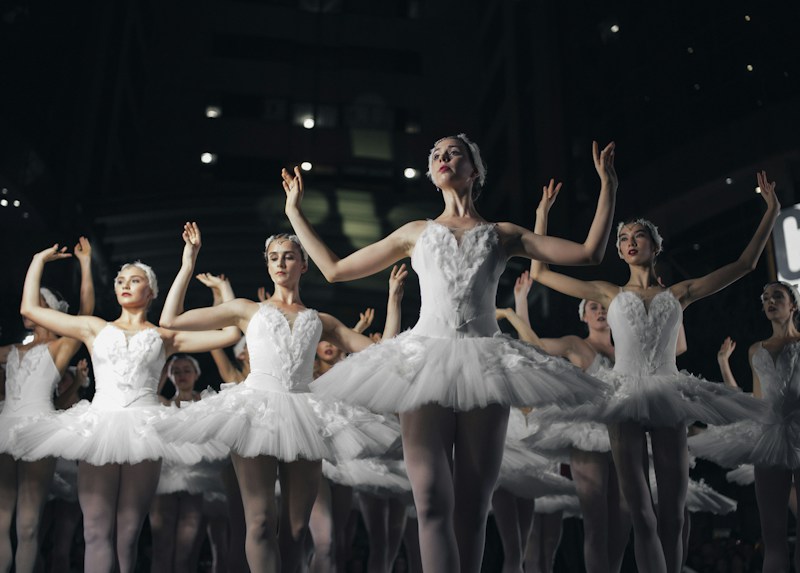
In 1961, photographer Martha Swope captured a young Edward Villella mid-leap during a New York City Ballet performance of The Prodigal Son — his body suspended in impossible stillness, every muscle visible, gravity momentarily defeated. That single image defined ballet photography for a generation and illustrated the extraordinary paradox at the heart of dance photography: freezing the most kinetic art form into a single, motionless frame.
Pioneers of Dance Photography
The history of photographing dance runs parallel to the history of photography itself. Eadweard Muybridge's sequential motion studies in the 1870s — showing horses galloping and humans walking — were, in a sense, the first dance photography: an attempt to break movement into comprehensible pieces. By the early 20th century, photographers like Baron Adolf de Meyer were capturing the ethereal quality of dancers like Vaslav Nijinsky, using soft focus and long exposures to suggest motion rather than arrest it.
The golden age of dance photography arrived mid-century. Martha Swope became the unofficial visual historian of New York City Ballet and Broadway, shooting over 3 million images across five decades. Jack Mitchell brought an intimate, glamorous eye to capturing companies like Alvin Ailey American Dance Theater, and his portraits of Judith Jamison became some of the most reproduced dance images in history. Max Waldman's dramatic, almost surreal black-and-white images stripped dancers to their essential forms, turning bodies into abstract sculpture.
In the commercial world, Annie Leibovitz's portraits of Mikhail Baryshnikov for Vanity Fair and American Express brought ballet into mainstream visual culture. Her 1990 image of a nude, paint-covered Baryshnikov remains one of the most iconic photographs of any dancer, ever.
The Modern Renaissance
Contemporary dance photography has exploded thanks to digital technology and social media. Jordan Matter pioneered the "Dancers Among Us" project (2009-2012), placing ballet dancers in everyday urban settings — leaping over puddles, balancing on subway rails, arabesquing in Times Square. His bestselling book and viral social media presence proved that dance photography could reach audiences far beyond the art world. His time-lapse videos of dancers performing in public became YouTube sensations.
Omar Z. Robles took a similar approach, photographing ballet dancers on the streets of New York, Cuba, Mexico City, and Puerto Rico. His Instagram account became one of the most followed dance photography feeds in the world, with images that play on the contrast between urban grit and balletic grace.
Lois Greenfield pushed technical boundaries by capturing dancers mid-air in her studio, using precise strobe timing to freeze moments invisible to the naked eye — bodies twisted into shapes that seem to defy anatomy. Her work sits at the intersection of photography and abstract art.
Dance in Visual Art Beyond Photography
Dance has been a subject for visual artists since prehistoric cave paintings depicted figures in ritualistic movement. Edgar Degas is the most famous example — his paintings and sculptures of Parisian ballet dancers in the 1870s and 1880s are among the most beloved works in art history. But Degas was documenting a specific social world as much as an art form: the backstage hierarchies, the wealthy patrons, the young dancers' labor.
In the 20th century, Henri Matisse's cut-outs — particularly "Dance" (1910) and his late-career paper cut-outs of blue dancers — reduced movement to its joyful essence. Keith Haring's dancing figures became one of the most recognizable visual motifs of the 1980s, bringing dance iconography into street art and pop culture.
Contemporary artists continue the tradition. Kehinde Wiley has painted dancers in the grand style of Old Masters. Video art by Bill Viola uses slow-motion dancers to explore spiritual and emotional states. Motion capture data from dance performances has been transformed into digital sculptures, projection-mapped installations, and AI-generated visual art.
The fundamental challenge remains the same one Muybridge faced 150 years ago: how do you capture something whose very essence is that it moves? The best dance photographers and visual artists don't try to stop motion — they find the single instant that contains all the motion within it, the moment where a body tells its whole story in one frozen breath.