On a warm evening in June 2019, at the Sadler's Wells Theatre in London, the audience watches something that defies easy categorization. On stage, choreographer Akram Khan -- born in London to Bangladeshi parents, trained in both classical kathak and contemporary Western dance -- performs a solo that weaves Mughal court gesture, Martha Graham floorwork, and the rhythmic footwork of Andalusian flamenco into a single seamless vocabulary. The piece is set to a score mixing tablas, cellos, and electronic beats. No single tradition owns what is happening on stage. Welcome to the global fusion era of dance.
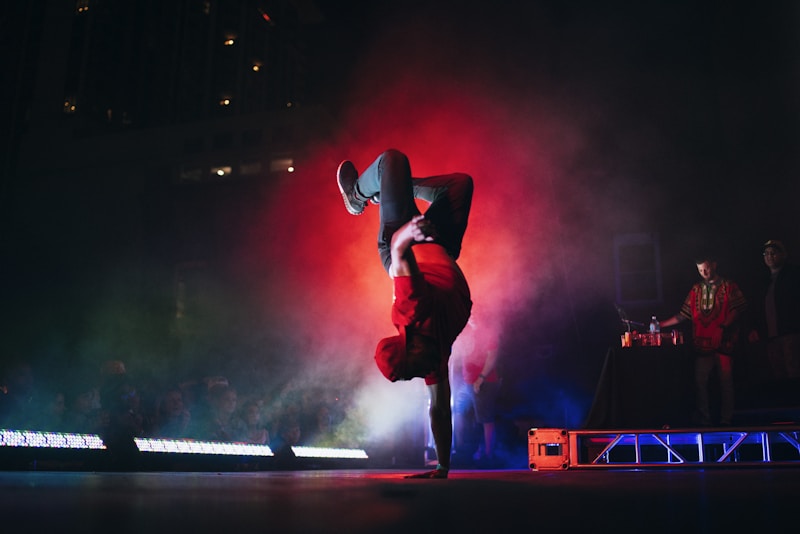
Origins: When Worlds Collide
Dance forms have always borrowed from each other -- the tango absorbed African, European, and Indigenous Argentine influences in 19th-century Buenos Aires; jazz dance fused West African movement with European theatrical staging. But the global fusion era, beginning roughly in the 1990s and accelerating through the 2000s and 2010s, is different in scale and speed. Three forces converged to make it possible.
First, migration. Cities like London, Toronto, New York, and Sydney became home to diaspora communities from every continent, and their children grew up fluent in multiple movement traditions. A dancer raised in a Punjabi household in Birmingham might study classical ballet at school, learn hip-hop from YouTube, and perform Bhangra at family weddings -- absorbing each into a personal vocabulary with no sense of contradiction.
Second, the internet. When the French dancer Les Twins posted videos in the early 2010s blending hip-hop new style with classical mime and African movement, they reached millions overnight. K-pop choreography, assembled by multinational creative teams and disseminated through platforms like YouTube and TikTok, became the world's most-watched dance form -- a hybrid of hip-hop, jazz, vogueing, and East Asian pop aesthetics consumed by audiences from Jakarta to Johannesburg. South African Amapiano dance challenges traveled from Johannesburg townships to global social media feeds in weeks.
Third, institutional embrace. Major dance companies began commissioning cross-cultural work. At Nederlands Dans Theater, choreographer Crystal Pite collaborated with playwright Jonathon Young on Betroffenheit (2015), blending theatrical text with contemporary dance, hip-hop, and vaudeville. Compagnie Kafig, from the banlieues of Lyon, France, built an entire repertory mixing breaking, capoeira, and circus arts. The Alvin Ailey American Dance Theater, founded in 1958 to celebrate Black cultural expression, increasingly programmed works drawing on Caribbean, African, and Asian movement vocabularies alongside its core modern repertory.
Tensions and Possibilities
Fusion is not without controversy. Critics raise legitimate concerns about cultural appropriation -- the extraction of movement from marginalized traditions by more powerful institutions or artists who profit without acknowledgment. When a Western contemporary dancer incorporates kathak hand gestures or Maori haka postures without understanding their sacred or ceremonial context, the result can flatten meaning into decoration.
The most successful fusion artists navigate this tension through deep study and genuine collaboration. When flamenco dancer Israel Galvan works with Akram Khan, or when South African choreographer Gregory Maqoma creates work with Faustin Linyekula from the Democratic Republic of Congo, the exchange flows in multiple directions, and each artist's tradition is enriched rather than diminished. Choreographer William Forsythe has argued that the future of dance lies not in preserving traditions in amber but in "making new ancestors" -- creating hybrid forms that can become traditions in their own right.
Lasting Legacy
The global fusion era has irrevocably changed what dance looks like, who makes it, and how it travels. A teenager in Lagos can learn a dance created in Seoul, adapt it to Afrobeats rhythms, post the result to TikTok, and inspire a choreographer in Sao Paulo -- all within a single week. This velocity of exchange raises urgent questions about credit, context, and consent. But it also represents something genuinely new in human history: a planetary dance conversation happening in real time, in which every tradition on Earth is simultaneously a source and a destination.
The dance floor has always been a place where cultures meet. What is different now is that the floor is everywhere, the music is everything, and the dancers number in the billions. The global fusion era is not a genre or a style. It is a condition -- the natural consequence of a connected world expressing itself through the oldest art form there is.