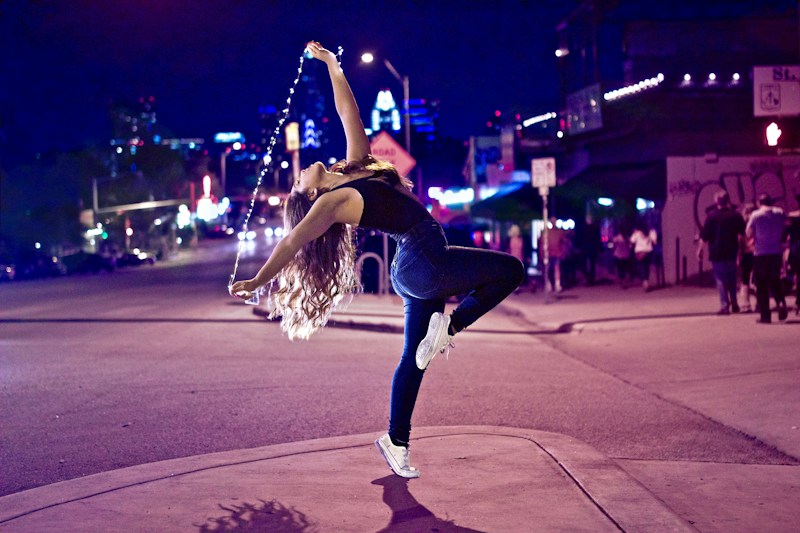
A circle forms. The beat drops -- a stripped-down funk break, all snare and bass. A b-boy steps in, hits a toprock combination with casual swagger, then drops to the floor and explodes into a windmill, transitions to a headspin, and freezes in mid-air with one hand planted and his body defying every rule of physics you thought you knew. The crowd erupts. This is breaking -- the original street dance of hip-hop culture, now an Olympic sport, and one of the most athletically demanding and creatively expressive art forms on the planet.
Technique & Characteristics
Breaking is traditionally performed to funk, soul, and breakbeat music -- specifically the percussion-heavy instrumental sections ("breaks") that DJs like Kool Herc isolated and looped in the early days of hip-hop. The dance is structured around four foundational elements:
Toprock -- the standing dance performed before going to the floor. Toprock establishes a dancer's style, rhythm, and personality. Moves include the Indian step, crossovers, kick-and-spin combinations, and endless personal variations. Great toprock looks effortless and musical.
Downrock (Footwork) -- floor-based movement performed with hands supporting the body while the legs execute rapid, intricate patterns. The six-step is the foundational pattern, but advanced b-boys and b-girls create dizzying variations that blur the line between footwork and power moves.
Power Moves -- the spectacular acrobatic elements that make breaking visually explosive. These include:
- Windmill -- continuous rotation from back to shoulders with legs extended
- Headspin -- spinning on the crown of the head, often with legs in various positions
- Flare -- legs swinging in wide circles while the body is supported on the hands (borrowed from gymnastics)
- Airflare -- a one-handed rotation with the body horizontal in the air, among the most difficult moves in all of dance
- 1990 (one-handed spin) -- spinning on one hand with the body inverted
Freezes -- held positions that punctuate sequences and showcase strength, balance, and creativity. The baby freeze, chair freeze, air freeze, and hollow back are staples, but top breakers invent signature freezes that become their calling cards.
Beyond these elements, advanced breaking incorporates transitions (the fluid connections between moves), musicality (hitting accents, riding grooves, pausing on breaks), and character (the personality and attitude that make each dancer unique). A battle round is judged not just on difficulty but on originality, execution, musicality, and the intangible quality of presence.
Cultural Significance
Breaking was born in the early 1970s in the South Bronx, New York City, created primarily by Black and Puerto Rican youth. Foundational figures include DJ Kool Herc (who isolated the breaks that gave the dance its name), crews like the Rock Steady Crew and the New York City Breakers, and individual pioneers like Crazy Legs, Ken Swift, Frosty Freeze, and Mr. Wiggles.
The dance was inseparable from the broader hip-hop movement. Along with MCing, DJing, and graffiti writing, breaking was one of hip-hop's four foundational elements. It offered young people in underserved communities a constructive outlet for competition, self-expression, and community building. Battles replaced fights. Crews became families.
Breaking exploded into mainstream consciousness in the early 1980s through films like Wild Style, Style Wars, Beat Street, and Breakin'. After a period of reduced visibility in the mainstream, the global breaking community continued to grow through battles, jams, and international competitions. The Red Bull BC One, Battle of the Year, and Outbreak Europe became the sport's major championships.
The ultimate recognition came in 2024, when breaking made its debut as an Olympic sport at the Paris Games. While the Olympics generated both excitement and controversy within the community, the inclusion validated breaking as a legitimate athletic and artistic discipline on the world stage.
Why People Love It
Breaking is the ultimate expression of individual creativity within a competitive framework. Every b-boy and b-girl develops their own style -- their own toprock flavor, their own way of stringing power moves together, their own signature freezes. The cipher rewards originality above all else. Copying another dancer's moves is one of the greatest taboos; creating something no one has seen before is the highest achievement.
The physical challenge is immense and deeply satisfying. Breaking builds extraordinary strength, flexibility, coordination, and body awareness. Nailing a move you have been practicing for months -- or years -- provides a rush that is hard to match in any other activity.