There is a moment in every ballet performance when the world falls silent and a single dancer rises onto pointe, defying gravity with nothing more than years of discipline, artistry, and an unwavering commitment to beauty. Ballet is the bedrock upon which nearly every Western dance form has been built -- a living tradition that has shaped movement vocabulary for over four centuries, and continues to captivate audiences with its marriage of athletic precision and ethereal grace.
Technique & Characteristics
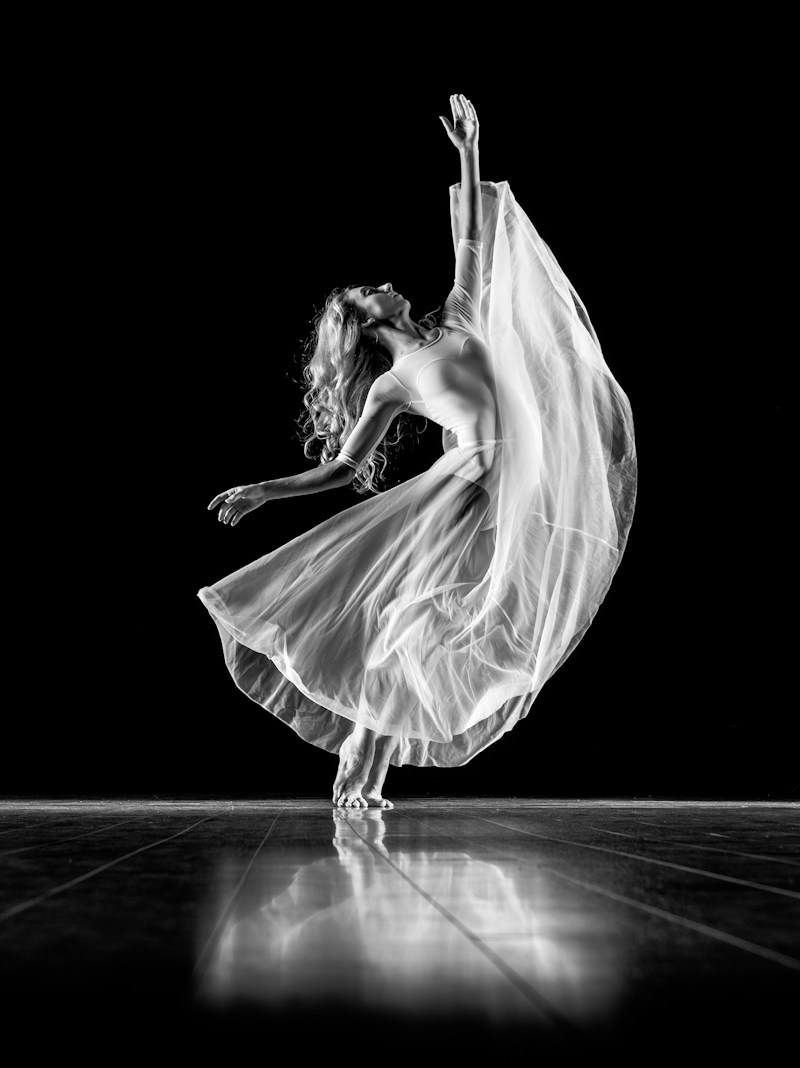
Ballet is defined by its codified vocabulary of movements, most of which retain their original French names: plié, tendu, relevé, arabesque, pirouette, grand jeté. Dancers train for years to develop turnout (external rotation of the legs from the hip), a long and lifted spine, and the strength required for pointe work -- dancing on the tips of specially constructed shoes.
The five basic positions of the feet form the foundation from which all ballet movement originates. Classes follow a centuries-old structure: barre exercises to warm the body and refine alignment, followed by centre work that builds to large traveling combinations across the floor. This rigorous methodology produces dancers capable of extraordinary feats -- soaring leaps, rapid-fire turns, and sustained balances that appear effortless.
Ballet encompasses several distinct styles. Classical ballet (think Swan Lake or The Sleeping Beauty) emphasizes symmetry, line, and virtuosic technique. Romantic ballet (Giselle, La Sylphide) favors softer, more atmospheric movement and supernatural themes. Neoclassical ballet, pioneered by George Balanchine, strips away elaborate sets and stories to focus on pure movement and musicality. Contemporary ballet blends classical technique with modern dance influences, pushing the art form into new territory.

Cultural Significance
Ballet emerged from the Italian Renaissance courts of the 15th century, was formalized in France under Louis XIV (himself an avid dancer), and reached its dramatic apex in 19th-century Russia under choreographers like Marius Petipa. Today it is a truly global art form, with major companies on every continent and a rich tradition that bridges European, American, Russian, and increasingly Asian and African influences.
The art form has always been a mirror for its era. The Romantic period's ballets reflected fascination with the supernatural; Soviet-era ballet became a vehicle for national pride; American ballet democratized the art form with Balanchine's plotless, music-driven works. In the 21st century, choreographers like Crystal Pite, Justin Peck, and Akram Khan are expanding ballet's boundaries, incorporating hip-hop, contemporary movement, and non-Western traditions.
Why People Love It
Ballet speaks a universal language. You do not need to understand French terminology or know the plot of Giselle to feel the rush of a grand allegro or the aching beauty of a slow adagio. It offers audiences an experience of human movement at its most refined -- proof that the body can be an instrument of extraordinary eloquence.
For dancers, ballet provides an unmatched foundation. The discipline, body awareness, and musicality developed in ballet class transfer to virtually every other dance style. Many of the world's greatest contemporary, jazz, and even hip-hop dancers began their training at the barre.